
Housing Everyone
Providing a place for everyone
America should be a country where no one is forced to sleep on the street, yet our housing system should encourage growth, responsibility, and self-sufficiency.
The goal is not to create permanent dependence on government programs.
The goal is to provide stability, safety, and opportunity so people can rebuild their lives and contribute to their communities.
Housing & Homelessness Action Plan
Goal
Eliminate unsheltered homelessness in America by ensuring every citizen has access to:
A safe place to sleep
Toilets and showers
Drinking water
Basic nutrition
Secure storage for belongings
Access to education and employment resources
No one should be forced to live on a sidewalk, under a bridge, or in a tent encampment.
Phase 1: Immediate Stabilization
Within the first 100 days, every city above a certain population threshold would be required to create designated Safe Community Zones.
These are not shelters.
Residents would have private space rather than sleeping in crowded dormitories.
Housing Option A: Safe Parking Communities
Many people become homeless while still owning: RVs, Vans, Cars, Campers
Rather than forcing these individuals into shelters, cities would establish secure parking communities.
Each site would provide:
Legal overnight parking
Water hookups
Electrical hookups
Waste disposal
Bathrooms and showers
Laundry
Security
Residents could remain in their own vehicle while rebuilding financial stability.
Real-world example: Oceanside’s 2026 safe parking program costs $329,329 per year
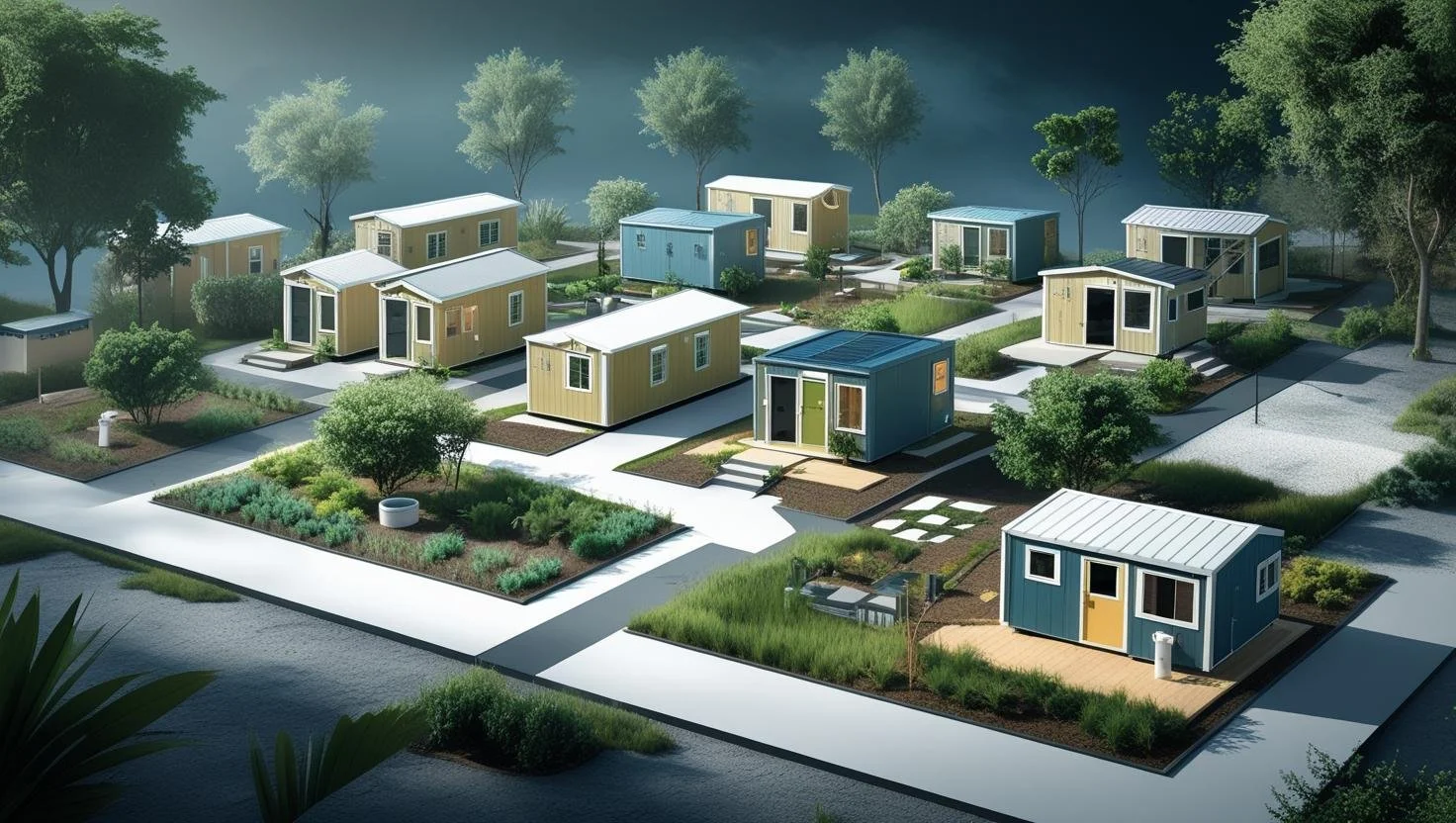
Housing Option B: Tiny Home Villages
For people without vehicles.
Each resident receives:
Private insulated tiny home
Bed
Electricity
Climate control
Locking door
Shared facilities include:
Bathrooms
Showers
Kitchen facilities
Community gardens
Training facilities
Recreation areas
This provides dignity and privacy while remaining cost-effective.
Housing Option C: Transitional Community Housing
For families and individuals who are working toward permanent housing.
Communities would include:
Studio apartments
Shared housing
Family units
Residents contribute through:
Employment
Education
Community service
Skills training
The goal is transition, not permanent residency.
Community Agriculture Integration
Each housing community would incorporate food production where practical.
Examples:
Gardens
Greenhouses
Hydroponic systems
Vertical farms
Benefits:
Fresh food
Reduced operating costs
Skills training
Community engagement
Path to Independence
Upon entering the program, every resident receives a personalized development plan.
Possible goals include:
Employment Track
Job placement and workforce training.
Education Track
Trade schools, apprenticeships, certifications, and college pathways.
Recovery Track
Addiction treatment and mental health services.
Family Stability Track
Childcare assistance, parenting support, and family reunification.
Permanent Housing Expansion
To increase housing supply nationwide:
ADU Incentive Program
Homeowners could receive incentives to create:
ADUs
Junior ADUs
Garage conversions
In exchange for offering housing opportunities.
Tiny Home Development
Federal standards would simplify permitting for tiny homes.
Adaptive Reuse
Candidates for conversion include:
Office buildings
Shopping malls
Hotels
Warehouses
Could be converted into housing and mixed-use communities.
Accountability
Residents capable of working, learning, or contributing would be expected to participate in a pathway toward independence.
Temporary assistance leading to permanent self-sufficiency. Not lifelong dependence.
Before going further, I think we should decide on one major policy question:
Do you envision these communities being available indefinitely to anyone who follows the rules, or should there be a time limit (for example 2-5 years) before residents must transition to independent housing?
That decision affects the entire structure of the program and its cost.
The Cost of Doing Nothing
Many cities already spend large amounts of money responding to homelessness through:
Police calls and enforcement
Emergency medical services
Emergency room visits
Encampment cleanups
Court proceedings
Jail stays
Public sanitation efforts
Studies in California have found that homelessness can cost taxpayers between $10,000 and $40,000 per person per year, with some high-utilization cases exceeding $100,000 per year through repeated emergency services and public system involvement.
Despite these costs, many individuals remain unhoused and continue cycling through the same systems year after year.
Taxpayers are already paying the bill.
The question is whether we spend that money solving the problem or simply managing its consequences.
The Safe Parking Community Solution
A typical Safe Parking Community would include:
100 vehicle spaces
20 RV spaces
Restrooms and showers
Laundry facilities
Security
Internet access
Mail services
Employment and housing resources
Estimated Annual Operating Cost
Approximately $700,000 per year. With approximately 130 households served, this equals:
About $5,400 per household annually or approximately $3,600 to $5,000 per person annually.
Comparing the Costs
Example: A City With 1,000 Vehicle Homeless Residents
Current System
Estimated annual public cost:
$10 million to $40 million per year through law enforcement, emergency services, sanitation, courts, and related programs.
Safe Parking Community Model
Estimated annual operating cost: Approximately $3.6 million per year
Potential savings:
Low Estimate: Current $10M → Safe Parking $3.6M → Savings: $6.4M/year
Moderate Estimate: Current $20M → Safe Parking $3.6M → Savings: $16.4M/year
High Estimate: Current $40M → Safe Parking $3.6M → Savings: $36.4M/year
The Freedom 2028 Approach
Instead of spending taxpayer dollars repeatedly responding to the symptoms of homelessness, Freedom 2028 proposes investing in practical solutions that provide:
Safety
Sanitation
Stability
Accountability
A pathway to independence
At a lower cost than many communities are already paying today.